About Leslie Whalen

More Than “This Herb is Good for That”
Herbalism, especially in the context of modern media and influencer culture, is often reduced to matching a plant to a symptom, or making a bold claim about a single herb.
How I work with plants is much larger.
When we cultivate a relationship with the natural world, we are invited to pay attention to our constitution, our patterns, the seasons, our environment, and the countless relationships that influence how a person feels.
That is why my work brings together herbal medicine with nutrition, movement, circadian rhythms and light, energetics, and careful observation of the body.
Whether I’m teaching a class, leading people through the woods, or working one-on-one with someone navigating a health concern, my goal is not simply to tell people what herb to take, but rather how to create a holistic lifestyle that supports long-term health and happiness. This can include herbs supportive for that person at that time, nutritional shifts, sunlight exposure, and even relaxation practices.
I want people to leave knowing more than they knew before, about their bodies, about the plants around them, and about how to make thoughtful decisions for themselves.
The Throughline: Awe
Eventually I realized that herbalism, naturalism, yoga, teaching, and my own healing journey had all been leading me toward the same practice:
Pay attention.
Awe begins there.
When we look closely at a plant, inhabit our bodies more fully, notice the changing light of a season, or begin recognizing patterns we previously overlooked, the world becomes less abstract. We become participants again.
That is the heart of School of Earth & Awe: cultivating the knowledge, skills, and attention that help us remember ourselves as part of the living world.
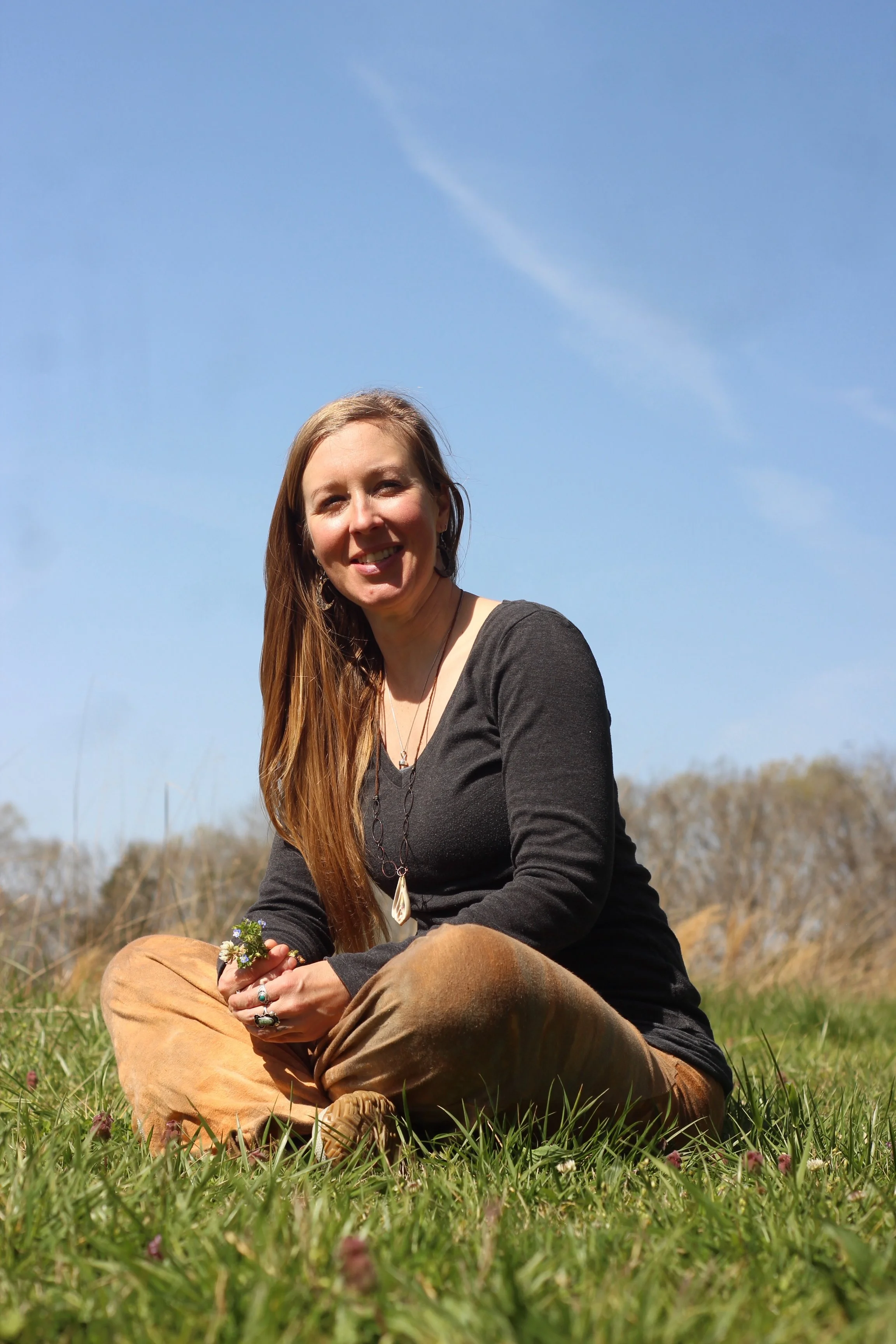
I’m Leslie Whalen, an herbalist, holistic health practitioner, yoga teacher, naturalist, and educator based in Middle Tennessee.
I grew up in Nashville, and considered the pine trees some of my best friends. Before I even knew the names of plants or anything about herbalism, I could feel that being outside and spending time amidst the plants nourished me.
That relationship with the living world is now the thread that runs through everything I teach.
I believe we are meant to know the plants, understand our bodies, be curious about our relationship to the world around us, and be involved more fully in our own health.
My work is about helping people rediscover that wisdom. Not through wellness trends, supplement stacks, or rigid rules, but through paying attention, cultivating awareness, and building practical skills.
The Path That Led Me Here
I came to herbalism through my own health challenges, just like many practitioners in the holistic health world.
In 2008, after being disappointed in the outcomes of conventional approaches, I began looking more deeply at nutrition, traditional healing practices, and the ways the body regulates and repairs itself. In 2009, I began my first formal study of herbalism.
Quickly, I shifted my whole lifestyle toward a more holistic and health-oriented approach.
I completed a Holistic Health Practitioner program in 2012, with certifications in herbalism and nutrition, and have continued studying with herbalists, teachers, and practitioners ever since.
In 2013, my relationship with health changed again when I experienced a stroke. That invited me into an even deeper inquiry. What is optimal health? What creates resilience? How does stress contribute to healing? How can we cultivate deeper reserves?
Those questions continue to shape my work today.
Training & Background
I have been studying and practicing herbalism since 2009 through formal education, mentorship, independent study, and hands-on practice.
My foundational training was a four-year program in holistic health, with certifications in herbalism, nutrition, and holistic health practice. Since then, I’ve continued my herbal education through advanced training, study with experienced herbalists and teachers, and more than fifteen years of working directly with plants.
My understanding of health has also been shaped by the study of movement, meditation, and the natural world. I began teaching yoga in 2013 and later completed my 500-hour certification, along with additional training in children’s yoga, trauma-informed yoga, special-needs yoga, and meditation instruction. In 2021, I became a certified Tennessee Naturalist, further grounding my work in botany, ecology, and the landscapes of Tennessee.
Credentials
Holistic Nutrition Certification — 2010
Herbalism Certification — 2011
Holistic Health Practitioner Certification — 2012
Registered Yoga Teacher (RYT) — 2013
500-Hour Yoga Teacher Certification — 2021
Tennessee Naturalist Certification — 2021
Circadian Biology Program — 2023
Advanced Herbalism Training — 2024
Continuing education in herbalism, holistic health, botany, ecology, and related fields
“Then the Lord God formed a man from the dust of the ground and breathed into his nostrils the breath of life, and the man became a living being.” Genesis 2:7
Earth + Breath
In Genesis, the human being is formed from the dust of the earth and given life by the breath of God.
That image has become one of the deepest expressions of what Earth & Awe means to me: we are creatures of soil and spirit, intimately embedded in the living world and yet capable of standing before it in wonder.
-
Yes, though School of Earth & Awe is not teaching through a religious lens, and you do not need to share my beliefs to learn here.
My own understanding of the natural world is deeply informed by faith. One of the images at the heart of this work comes from Genesis (2:7), the human being formed from the earth and animated by the breath of God. I find that to be profound. We are both embodied creatures of the earth and bearers of divine breath.
I don't see a conflict between faith and the medicinal use of plants. Plants have observable chemistry and physiological effects; understanding and working with those properties is part of learning the world we've been given. For me, reverence for God does not require diminishing the complexity or agency of creation, rather it deepens my wonder at it.
At the same time, I teach people from many religious and philosophical backgrounds. I don't ask students or clients to adopt my theology, and herbalism is not presented here as a religious practice.
-
I want this work to be accessible while also making it sustainable for me to offer. Some classes and programs include sliding-scale or reduced-cost options, and I periodically offer free or low-cost community programs.
If there is something you genuinely want to participate in but cost is the barrier, please reach out. I can’t always accommodate every request, but I’m happy to tell you what options are available.
-
Yes. I regularly create classes, workshops, plant walks, and educational programs for schools, community groups, organizations, private gatherings, and other spaces.
Programs can often be adapted to different ages, interests, settings, and timeframes. If you have a topic or gathering in mind, reach out and tell me what you’re envisioning.
-
Not at all. Many of my classes are designed for people who are just beginning to learn about plants and their bodies. Others go deeper and will be clearly marked when previous knowledge is helpful. Curiosity and a willingness to pay attention are usually the best place to begin.